
The Ultimate Guide to Navigating Social Assistance: How to Perform a Cek Bansos Kemensos in the Digital Age
The integration of digital technology into government services has revolutionized the way citizens access essential public programs. In Indonesia, one of the most critical public welfare initiatives is the social assistance program administered by the Ministry of Social Affairs (Kementerian Sosial or Kemensos). With millions of households relying on these stipends, food aids, and healthcare subsidies to manage daily living costs, the government has moved away from traditional, manual distribution lists to a more transparent, accessible digital framework. Understanding how to check your eligibility—commonly referred to as performing a cek bansos kemensos is no longer a complex bureaucratic hurdle; it is a straightforward digital process that empowers citizens.
This article explores the significance of this digital shift, provides a detailed guide on how to verify your social assistance status, and highlights why staying informed is crucial for eligible beneficiaries navigating the modern socio-economic landscape.
What is the Kemensos Social Assistance Program?
The Ministry of Social Affairs in Indonesia oversees several flagship welfare programs designed to alleviate poverty, support vulnerable demographics, and provide emergency relief during economic downturns or unforeseen natural disasters. These programs primarily include the Family Hope Program (Program Keluarga Harapan or PKH), the Non-Cash Food Assistance (Bantuan Pangan Non-Tunai or BPNT), and the Cash Social Assistance (Bantuan Sosial Tunai or BST).
The primary objective of these initiatives is to ensure an equitable distribution of national resources to those who need them most. Over the years, the Ministry has integrated its beneficiary database into a unified Data on Social Welfare (DTKS). The DTKS acts as the central, authoritative hub for all social assistance programs. Being registered in the DTKS is the fundamental prerequisite for receiving any form of aid from the government.
However, registration alone does not guarantee immediate disbursement, which is why regularly conducting a cek bansos kemensos is essential. By consistently verifying their status, families can confirm whether they have been allocated funds for the current distribution cycle, ensuring they do not miss out on vital, life-changing support.
The Importance of Digital Verification
In the past, verifying one’s status for social assistance required taking time off work to visit local village or sub-district administrative offices. This analog process was not only time-consuming but also heavily prone to human error, miscommunication, and administrative delays. The shift to online portals and mobile applications has fundamentally changed this dynamic for the better.
Digital verification promotes ultimate transparency, allowing citizens to bypass intermediaries and access their status directly from the government’s official central database. This direct access significantly reduces the risk of fraud, unauthorized deductions, and localized misinformation. Furthermore, in an era where digital literacy is rapidly expanding across all demographics, providing online tools for a cek bansos kemensos ensures that welfare distribution keeps pace with modern technological standards.
For platforms focused on digital empowerment, education, and seamless document sharing—like SlideShareSaver—recognizing the importance of such government tech tools highlights the broader impact of internet accessibility. Whether you are downloading educational resources, saving vital presentation slides, or verifying your welfare status, the underlying principle is the exact same: the internet democratizes access to critical information and levels the playing field for everyone.
A Step-by-Step Guide to Cek Bansos Kemensos
To make the process as inclusive and accessible as possible, the Ministry of Social Affairs has provided multiple digital avenues for citizens to check their social assistance status. Here is a comprehensive guide on how to perform a verification effectively:
1. Through the Official Kemensos Website
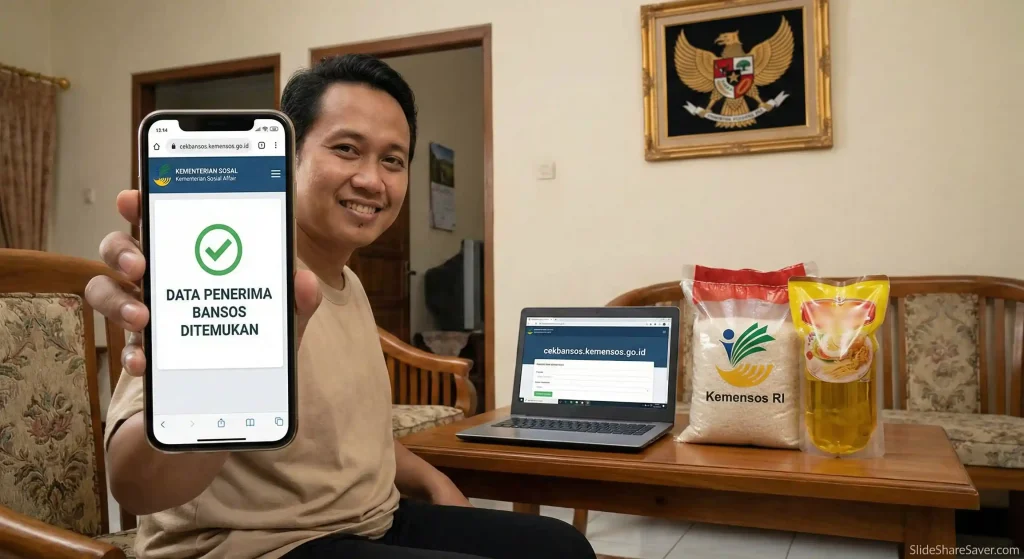
The most common and accessible method is visiting the official Kemensos web portal dedicated to social assistance. The user interface is designed to be intuitive. Users simply need to navigate through drop-down menus to select their specific province, regency or city, district, and village. After inputting their exact name as it appears on their National Identity Card (KTP) and completing a simple captcha verification to prevent bot traffic, the system will rapidly search the DTKS database. If the individual is registered, the system will display the beneficiary’s name, age, and the specific type of assistance they are slated to receive during the current period.
2. Using the Mobile Application
For smartphone users, the official ‘Aplikasi Cek Bansos’ offers a much more personalized and interactive experience. After downloading the application and registering for an account using a KTP and Family Card (KK), users unlock a suite of powerful features. They can not only check their own status but also utilize the ‘Sanggah’ (Objection) and ‘Usul’ (Proposal) features. This crowd-sourced oversight allows citizens to report if an ineligible person is fraudulently receiving aid, or alternatively, propose a deserving, impoverished family that has been accidentally overlooked by local authorities.
3. Leveraging Dedicated Informational Portals
Navigating government websites and understanding bureaucratic terminology can sometimes be daunting for first-time internet users. Fortunately, the digital ecosystem has responded with dedicated informational websites designed specifically to guide users through these processes. For those looking for streamlined information, step-by-step tutorials, and comprehensive guides, portals such as cekbansoskemensosgo.id offer highly valuable insights into navigating these digital government systems seamlessly. These external resources break down bureaucratic jargon into easily digestible content, ensuring that no eligible citizen is left behind simply due to a lack of technical understanding.
Troubleshooting Common Verification Issues
Despite the user-friendly design of these digital verification systems, applicants may occasionally encounter technical or administrative issues.
One of the most frequently reported problems is a “Data Not Found” error message. This usually occurs if there is even a minor discrepancy between the name entered into the search portal and the name officially registered in the national Population and Civil Registry (Dukcapil) database. It is absolutely crucial to enter the name exactly as it appears on the KTP, paying close attention to spelling, titles, and spacing.
Additionally, the DTKS database is massive and is periodically updated by regional governments. If a family has recently experienced a sudden change in economic status or has recently moved to a new jurisdiction, it may take time for this information to officially reflect in the central system. In such cases, coordinating directly with local village officials (RT/RW) to ensure data synchronization between local community records and the central national database is highly recommended.
The Role of Community Oversight
The transition to digital verification is not just about individual access; it is also about fostering a culture of community oversight. The implementation of objection and proposal features in the Kemensos digital infrastructure relies heavily on the active participation of the public.
When citizens take the initiative to perform a cek bansos kemensos, they are not only safeguarding their own welfare but also contributing to the integrity of the entire system. By reporting inaccuracies, communities help the government refine the DTKS database, ensuring that limited state funds are directed exclusively toward those living in genuine poverty. This participatory approach to public administration represents a significant maturation of civic engagement in the digital age.
Conclusion
The digitization of social assistance verification represents a monumental step forward in public administration and social justice. By allowing citizens to perform a cek bansos kemensos from the comfort of their homes using nothing more than a smartphone or computer, the government has fostered a vastly more transparent, efficient, and equitable welfare system.
As internet access continues to expand and digital tools become more integrated into daily life, empowering individuals with the knowledge to utilize these resources is paramount. Whether accessing information through official applications or relying on dedicated tutorial portals to bridge the knowledge gap, the goal remains the same. Staying informed, utilizing available guides, and actively participating in the digital verification process ensures that the social safety net functions exactly as intended—supporting the nation’s most vulnerable populations effectively, rapidly, and with unwavering transparency.